Rose Blush: A Romantic Brush Font for Modern Web Design
The digital canvas of a website demands typography that not only communicates but also connects. For web designers and digital creators crafting authentic brand experiences, the choice of typeface is a foundational decision. In a landscape of clean sans-serifs and functional systems fonts, a touch of personality can become a powerful differentiator. Rose Blush enters this space as a romantic, hand-drawn brush font designed not just for print, but with digital origins as an SVG font.
The Personality of a Digital Brush Stroke
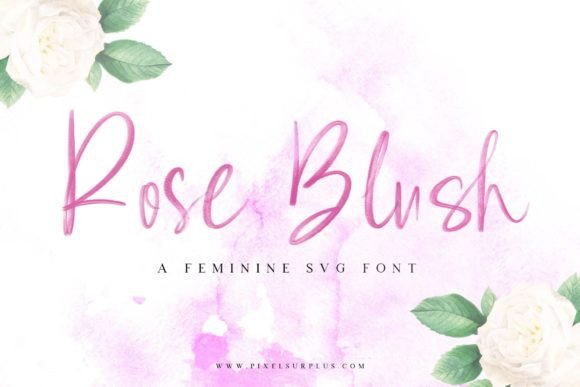
Rose Blush carries a distinct, approachable charm. Its strokes mimic the natural variance of a brush or pen, with subtle texture and a flowing rhythm. This isn't a rigid, geometric script; it has a soft, human touch. The character set is comprehensive, including full upper and lower case, numbers, punctuation, and international accents, making it viable for more than just a single-word headline. Visually, it sits comfortably within the Script Amp category, offering that handwritten aesthetic without veering into overly casual or illegible territory. For a web designer, this means it possesses a decorative quality that remains professional, capable of setting a brand tone that is creative, warm, and trustworthy.
Strategic Placement in Web Layouts
Knowing where a font performs best is key to maintaining usability and enhancing design. Rose Blush is inherently a display font. Its primary strength lies in creating focal points and establishing visual hierarchy.
Hero Sections and Headers
Use Rose Blush for your main website hero title or key section headers. On a landing page for a creative service, boutique online store, or coaching website, "Welcome" or "Transform Your Process" written in Rose Blush immediately establishes a personal, crafted tone. It draws the eye and frames the entire section.
Call-to-Action Accents
While not typically suited for long body copy, Rose Blush can be powerful on key buttons or short, impactful phrases. Consider using it for the word "Buy" or "Subscribe" on a primary button, or for a short, motivating tagline directly above a form. This creates a branded emphasis that feels inviting.
Brand Graphics and Logotype
For bloggers, creative entrepreneurs, or SaaS founders needing a logotype for their site header or brand graphics, Rose Blush offers a ready-made solution. It can form the entire name or be combined with a simpler font for a hybrid logo. Its hand-drawn nature suggests authenticity and care, valuable traits for digital brands.
It is less ideal for paragraphs of body text, small UI labels, or dense informational sections. Reserve it for moments where you want to inject brand personality and visual interest without sacrificing scannability.
Readability and Responsive Considerations
A romantic script font must still function on screens of all sizes. For mobile readability, ensure sizes are generous. As a heading on mobile, Rose Blush should likely be used at a larger pixel size than a comparable sans-serif to maintain character distinction. On dark or light backgrounds, test for contrast; its organic strokes can benefit from a slight increase in font weight or a careful background color choice to ensure clarity. When overlaying on images, a semi-transparent background panel behind the text can prevent the intricate details from blending into complex photo textures.
Building a Cohesive Typographic System
No font lives alone in web design. The most effective use of a decorative font like Rose Blush comes from thoughtful font pairing. Its handwritten, romantic style pairs beautifully with simple, neutral sans-serif fonts for body copy. Think of a clean, geometric sans-serif like Inter or Poppins for paragraphs, buttons, and menus. This creates a clear hierarchy: Rose Blush for emotion and brand voice, the sans-serif for clarity and readability.
For a more editorial or traditional digital identity, pairing Rose Blush with a classic serif font for body text can also work, suggesting a blend of personal craft and established authority. Always test pairings in actual layout mockups to see how the rhythms interact.
A Font Designed for the Digital Space
The mention of SVG font origins is relevant. SVG fonts can offer certain advantages in vector scalability, though for web implementation, you'll typically be using standard web font formats like WOFF2. Crucially, verifying the webfont licensing and file formats included with Rose Blush is a mandatory step. For use on websites, client projects, online stores, and landing pages, you need a license that covers web embedding. This ensures you can legally convert and serve the font via CSS, a fundamental requirement for any live digital project.
Its inclusion of international accents broadens its usability for brands with a global audience or multilingual sites, allowing for consistent branding across different language versions.
Practical Applications for Digital Creators
- Creative Portfolio: Use Rose Blush for your name and section titles, paired with a minimalist sans-serif for project descriptions.
- Boutique E-commerce Store: Implement it in banners announcing a new collection or for the brand name in the site header, evoking a handcrafted product feel.
- Course Sales Page: Apply it to the course title and key benefit headlines to make the offer feel personal and directly communicated.
- Digital Brand Kit: Include Rose Blush as the designated display font for all branded web content, from blog headers to social media graphics created for web links.
Rose Blush is more than a pretty typeface. It is a design asset for building a consistent online identity that feels human and engaged. By applying it strategically—to key headlines, logos, and accent text—you leverage its romantic personality to support brand tone, guide visual hierarchy, and ultimately, create conversion-focused layouts that resonate because they feel authentically crafted. In the toolbox of a web designer focused on brand-focused web experiences, such a font provides a specific, valuable voice.